
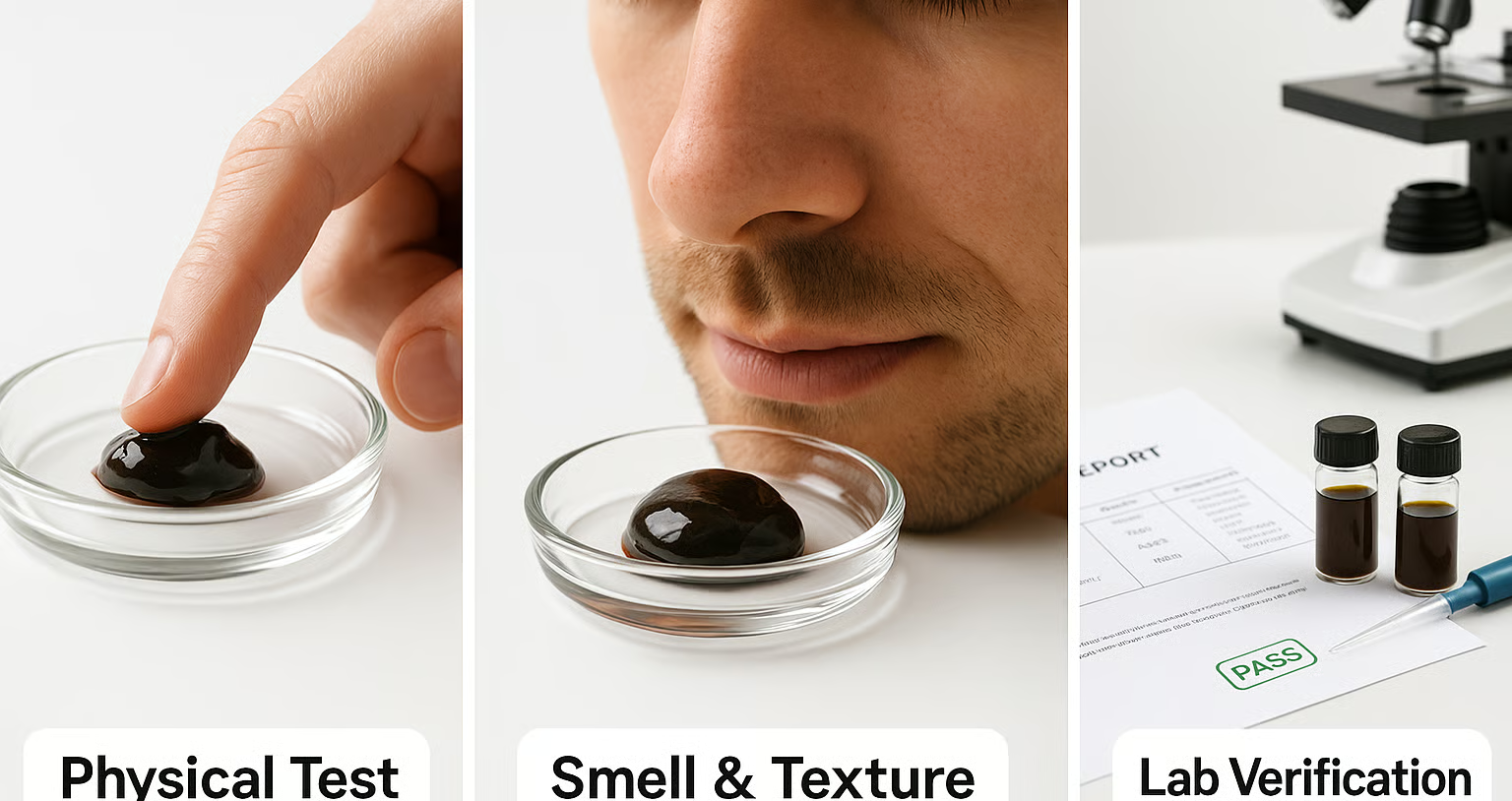
Learn how to identify real vs fake Shilajit with this complete guide. Discover purification signs, laboratory testing, texture, smell, dissolution, and authenticity verification tips.
Sikmma Research Team | Reviewed by: Sikmma Group Research Team
Sikmma Shilajit — Pure Himalayan Resin, BSCG Certified Quality
How to Identify Real vs Fake Shilajit, A Comprehensive Authenticity Guide
The global demand for Himalayan Shilajit has increased rapidly over the last few years. More people now search for authentic resin to support energy, focus, stamina, and overall wellness.
Unfortunately, the rise in popularity has also created a major problem: the market is now filled with fake, poorly purified, synthetic, and unrelated products under the name of “pure Shilajit.”
Many buyers cannot easily distinguish between authentic Himalayan resin and low-quality marketplace products.
This guide explains how to identify real vs fake Shilajit using scientific, physical, and purification-based indicators.
Key Takeaways
- Authentic Shilajit should be laboratory tested
- Real resin dissolves gradually in warm water
- Fake products often contain additives or impurities
- Purification quality strongly affects texture and safety
- Laboratory verification helps confirm authenticity
- Unrealistic fulvic acid claims are common in the market
Table of Contents
- What Is Authentic Shilajit?
- Why Fake Shilajit Is Common
- How Real Shilajit Looks
- Smell and Taste Differences
- Real vs Fake Dissolution Test
- Texture and Temperature Behaviour
- Why Laboratory Testing Matters
- What Is ICP-MS?
- Common Signs of Fake Shilajit
- Why Purification Is Important
- Understanding Fulvic Acid Claims
- Real vs Fake Shilajit Comparison
- Frequently Asked Questions
- Final Thoughts
What Is Authentic Shilajit?
Authentic Shilajit is a natural mineral-rich resin formed over centuries in high-altitude mountainous regions such as the Himalayas and Karakoram ranges.
Real resin naturally contains fulvic acid, humic substances, trace minerals, and organic compounds.
Authentic Himalayan resin is harvested carefully from mountain rock surfaces and then purified before use.
Why Fake Shilajit Is Common
The Shilajit industry has become highly competitive.
Many low-quality products now use:
- Unfiltered fillers
- Excessive heating
- Synthetic resin mixtures
- Poor purification methods
- Fake laboratory reports
Some sellers focus more on marketing claims than actual scientific standards, such as transparency, testing results, sourcing information, and purification details.
How Real Shilajit Looks
Authentic Himalayan resin usually has a dark brownish-black appearance, glossy sheen, natural shine, and a reflecting behaviour when warmed.
Non-real resin can feel too hard and plastic-like, extremely oily, chemically glossy, or artificially shiny.
Smell and Taste Differences
Authentic Shilajit Smell
Real Shilajit usually has an earthy aroma, mineral-rich scent, and a natural mountain smell.
Fake Shilajit Smell
Low-quality products may smell chemical, smoky, burnt, or artificial.
Taste
Authentic resin usually tastes naturally bitter, mineral rich, and earthy. Artificially sweet or flavoured products should raise concern regarding authenticity.
Real vs Fake Dissolution Test
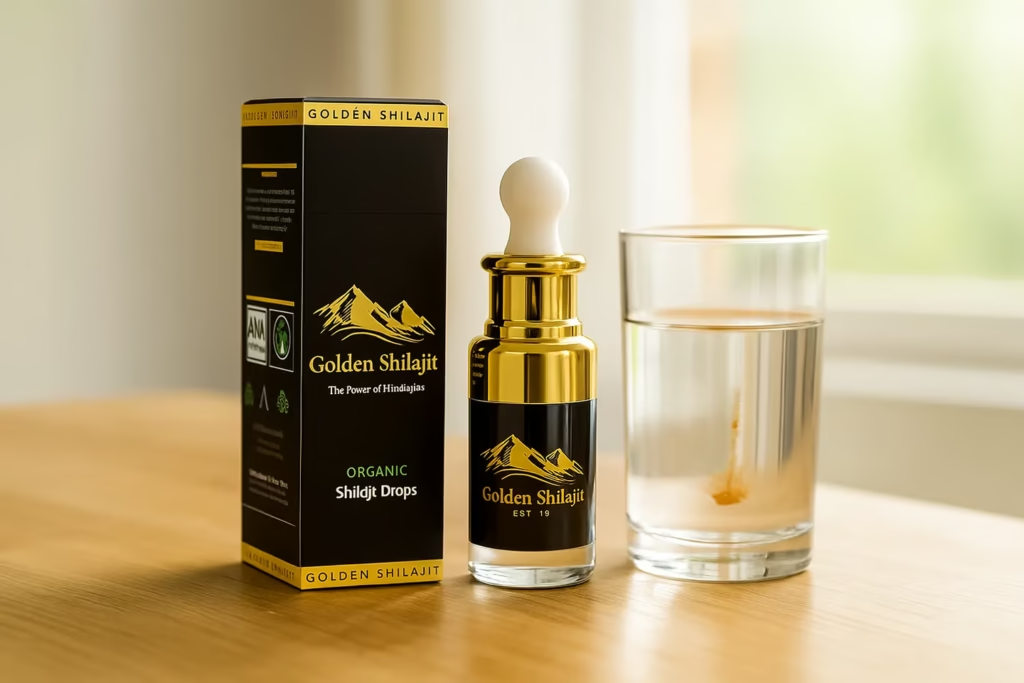
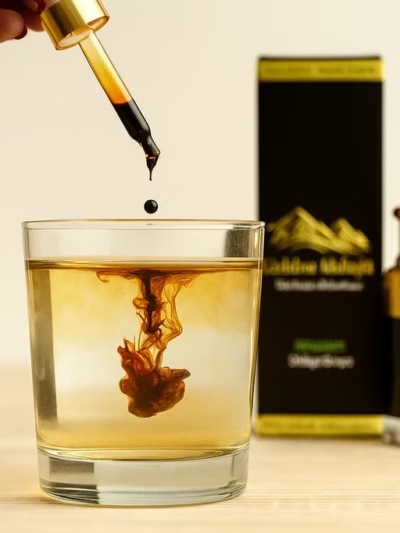
One of the simplest ways to examine resin quality is the warm-water dissolution test.
Authentic Resin
Dissolves gradually in warm water, creates a mineral-rich smooth appearance, and leaves minimal residue when purified properly.
Fake Products
Often leave excessive residue, may float or clump unnaturally, may have a chemical odour, and show poor dissolution behaviour.
This test alone cannot fully confirm authenticity, but it can help identify obvious quality issues.
Texture and Temperature Behaviour
Authentic resin naturally reacts to temperature.
In Warm Conditions
Real Shilajit becomes softer, more flexible, and easier to handle.
In Cold Conditions
It may become firmer, denser, and slightly harder.
However, authentic resin should not behave like plastic — it should not turn extremely hard or industrially glue-like, or become rubber-like in texture.
Why Laboratory Testing Matters
Third-party laboratory verification is one of the strongest indicators of authentic Shilajit quality.
Proper testing may include:
- Heavy metal analysis
- Microbial testing
- Contamination screening
- Fulvic acid analysis
Advanced laboratories often use ICP-MS testing for trace elements and heavy metal verification.
What Is ICP-MS?
ICP-MS stands for Inductively Coupled Plasma Mass Spectrometry.
It is an advanced scientific method used to verify heavy metals and trace elements, and is widely known for its accuracy.
Common Signs of Fake Shilajit
Be cautious if a product:
- Has no laboratory report
- Claims unrealistic fulvic acid percentages
- Makes vague sourcing information
- Dissolves poorly
- Smells strongly chemical
- Uses aggressive marketing without genuine transparency
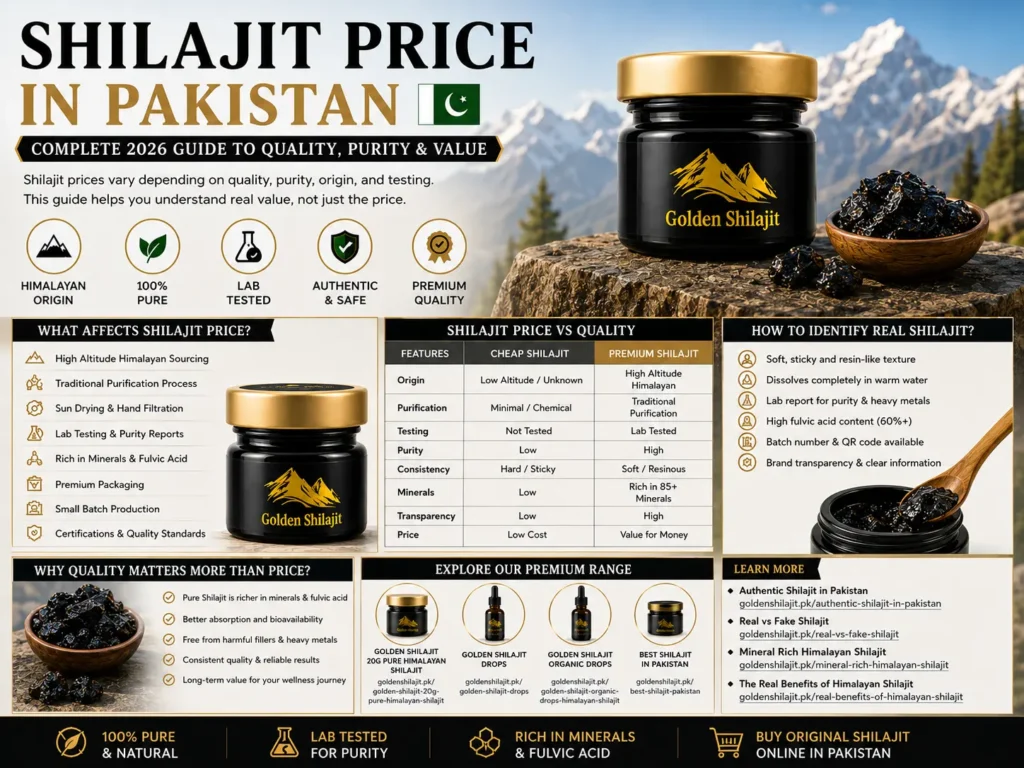
Many fake products focus heavily on extremely low pricing, exaggerated claims, and unrealistic purity percentages.
Why Purification Is Important
Raw mountain resin naturally contains impurities, sand particles, plant residue, and environmental contaminants.
Purification is necessary for safety, quality, consistency, and proper preservation of natural compounds.
Traditional purification and controlled drying methods may require several weeks, while rapid industrial heating methods can negatively affect resin quality.
Understanding Fulvic Acid Claims
Fulvic acid is one of the most discussed compounds naturally found in Shilajit.
However, testing methods vary, laboratories use different standards, and exaggerated percentages are common in the market.
Authentic Shilajit quality depends on purification quality, mineral composition, source authenticity, and laboratory verification — not only marketing percentages.
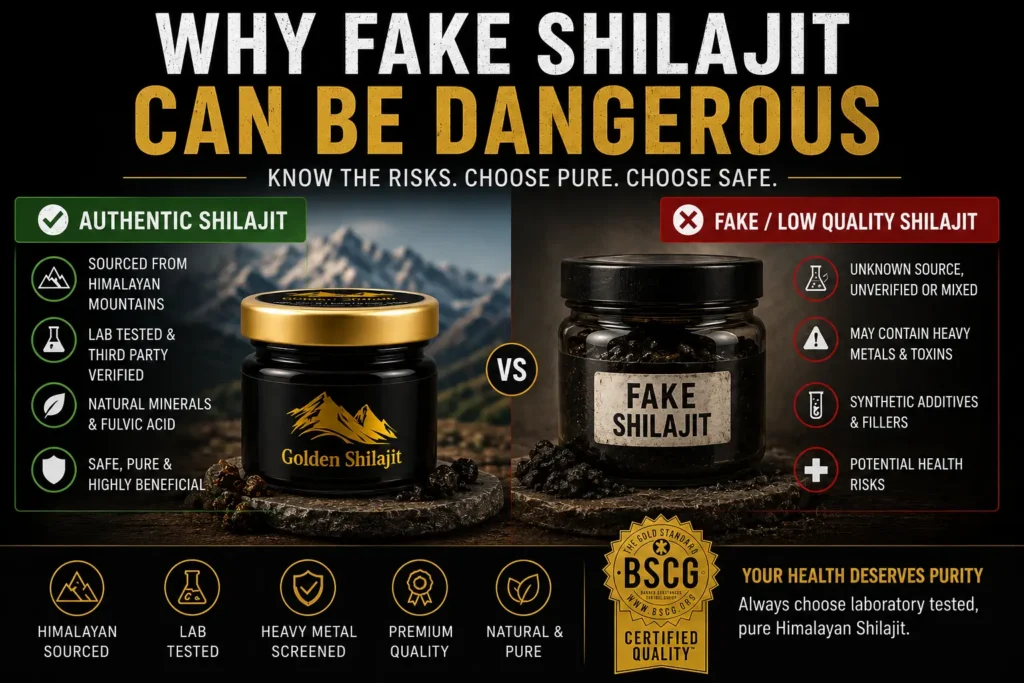
Real vs Fake Shilajit Comparison
Authentic Shilajit:
- Genuine Himalayan mountains
- Testing: independently verified
- Purification: controlled process
- Smell: earthy and natural
- Texture: natural resin consistency
- Dissolution: gradual and clean
- Transparency: sourcing and testing details
Fake or Low-Quality Products:
- Source: unknown or unverified
- Testing: often absent
- Purification: rapid or industrial process
- Smell: chemical or artificial
- Texture: excessively hard or overly sticky
- Dissolution: excessive residue leaves poor result
- Transparency: marketing-focused claims
Frequently Asked Questions
Can fake Shilajit contain contaminants?
Yes, poorly purified or unverified products may contain contaminants or impurities.
Why does authentic Shilajit dissolve better in warm water?
Warm water helps break down properly purified resin evenly, and improved dissolution.
Why are laboratory reports important?
Testing helps verify purity, safety, and authenticity.
Is very cheap Shilajit usually authentic?
Very cheap products often skip purification, laboratory testing, and rely heavily on unverified sourcing, which usually indicates lower quality material.
Why does real Shilajit change texture with temperature?
Authentic resin naturally reacts because of its natural mineral composition, becoming softer in warm conditions and slightly firmer in cold conditions.
Final Thoughts
The increasing popularity of Shilajit has led to an increase in the number of fake and poorly purified products in the market.
Authentic real Shilajit usually depends on:
- Transparent sourcing
- Proper purification standards
- Laboratory verification
- Manufacturing transparency
Understanding the differences between real and fake Shilajit helps buyers make more informed and confident purchasing decisions — and reflects the standard Sikmma Shilajit continues to aim for.