

Discover the science behind mineral-rich Himalayan Shilajit, including its natural trace minerals, fulvic acid, purification process, and laboratory-verified composition.
Sikmma Research Team | Reviewed by: Sikmma Group Research Team
Sikmma Shilajit — Pure Himalayan Resin, BSCG Certified Quality
The Science Behind Himalayan Shilajit and Its Mineral Rich Composition
Himalayan Shilajit has gained global attention because of its naturally occurring mineral composition, fulvic acid content, and traditional use in wellness routines.
As more people search for authentic mineral-rich wellness products, interest in purified Himalayan resin continues to increase across international markets.
At the same time, many consumers still don’t fully understand how authentic Shilajit forms, why mineral composition matters, how fulvic acid works, why purification is important, or why laboratory testing verifies quality.
Understanding the science behind authentic Himalayan Shilajit helps buyers make more informed decisions in a market filled with inconsistent products and exaggerated marketing claims.
Key Takeaways
- Himalayan Shilajit naturally contains trace minerals and fulvic compounds
- Source region strongly affects mineral composition
- Purification is important for purity and safety
- Fulvic acid is one of the most discussed natural compounds in Shilajit
- Laboratory testing helps verify purity and authenticity
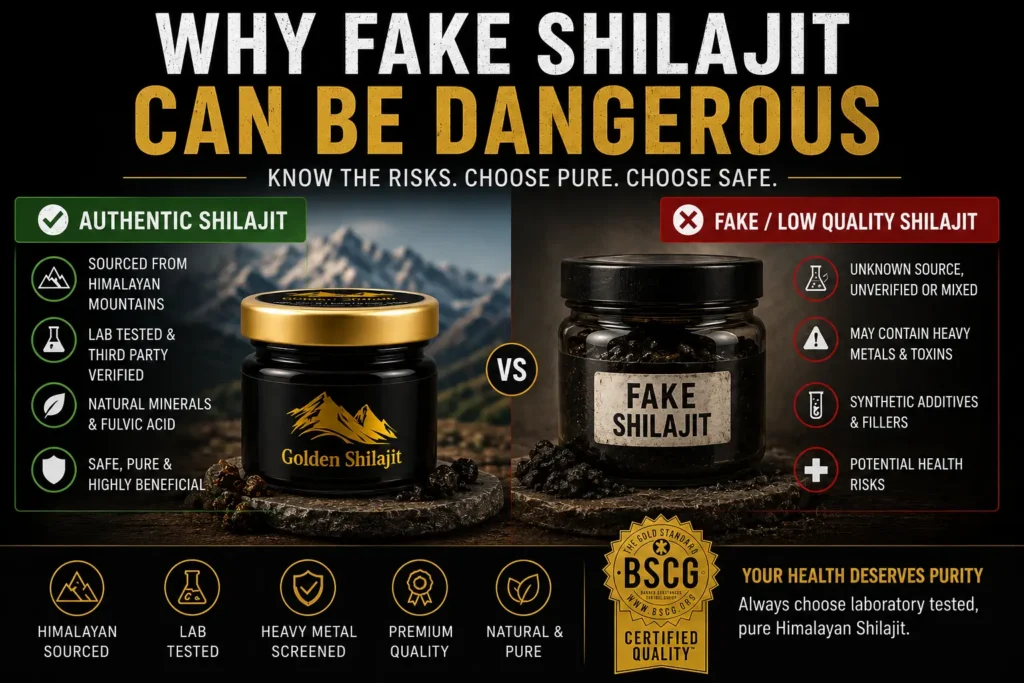
- Authentic resin differs significantly from low-quality marketplace products
Table of Contents
- What Is Himalayan Shilajit?
- How Shilajit Naturally Forms
- Understanding Mineral Rich Composition
- What Is Fulvic Acid?
- Why Trace Minerals Matter
- Why Purification Is Important
- Why Laboratory Testing Matters
- Understanding ICP-MS Testing
- Why Source Region Matters
- How to Choose Authentic Himalayan Resin
- Frequently Asked Questions
- Final Thoughts
What Is Himalayan Shilajit?
Shilajit is a natural, mineral-rich resin formed over centuries through the gradual breakdown of organic plant materials and minerals within mountainous rock environments.
Authentic resin is commonly sourced from:
- The Himalayan mountains
- Karakoram regions
- High-altitude rocky environments
Natural Himalayan resin contains fulvic acid, humic substances, trace minerals, and organic compounds.
How Shilajit Naturally Forms
Shilajit develops slowly over long periods within mountainous geological environments.
Environmental factors involved include:
- Plant decomposition
- Mineral interaction
- Pressure variations
- Mountainous rock formations
Over time, natural organic material combines with mineral-rich compounds to form resinous material found in high-altitude mountain cracks and rock surfaces.
This slow natural process is one reason authentic Shilajit is considered valuable.
Understanding Mineral Rich Composition
One of the main reasons Himalayan Shilajit receives global attention is its naturally occurring mineral profile.
Authentic resin contains various trace minerals that originate from mountain geological environments.
Mineral composition can vary depending on:
- Source region
- Altitude
- Purification quality
- Environmental conditions
Authentic resin quality depends heavily on responsible sourcing, proper purification methods, and laboratory verification — not simply marketing claims.
What Is Fulvic Acid?
Fulvic acid is one of the most discussed compounds naturally found in Shilajit.
It is a naturally occurring organic compound formed during the breakdown of plant material and minerals over time.
Many buyers search specifically for fulvic acid because it is widely associated with authentic mineral-rich resin.
However, customers should understand that testing methods vary, laboratories use different standards, and exaggerated percentages are common in the market. Authentic quality depends on overall composition and purification, not inflated marketing numbers.
Why Trace Minerals Matter
Trace minerals are naturally occurring elements present in authentic Himalayan resin.
Many people now seek mineral-rich wellness products because modern lifestyles often include processed food, high stress levels, poor recovery habits, and low nutrient diversity.
Authentic Shilajit is valued partly because of its naturally occurring mineral composition sourced from mountainous environments.
Why Purification Is Important
Raw mountain resin is not immediately suitable for use after harvesting.
It may naturally contain sand particles, plant residue, impurities, and environmental contaminants.
Purification is one of the most important stages in producing high-quality Himalayan Shilajit.
Careful purification helps preserve mineral composition, resin consistency, natural compounds, and overall quality.
Traditional purification and controlled drying methods may require several weeks. Rapid industrial methods can negatively affect natural resin quality.
Why Laboratory Testing Matters
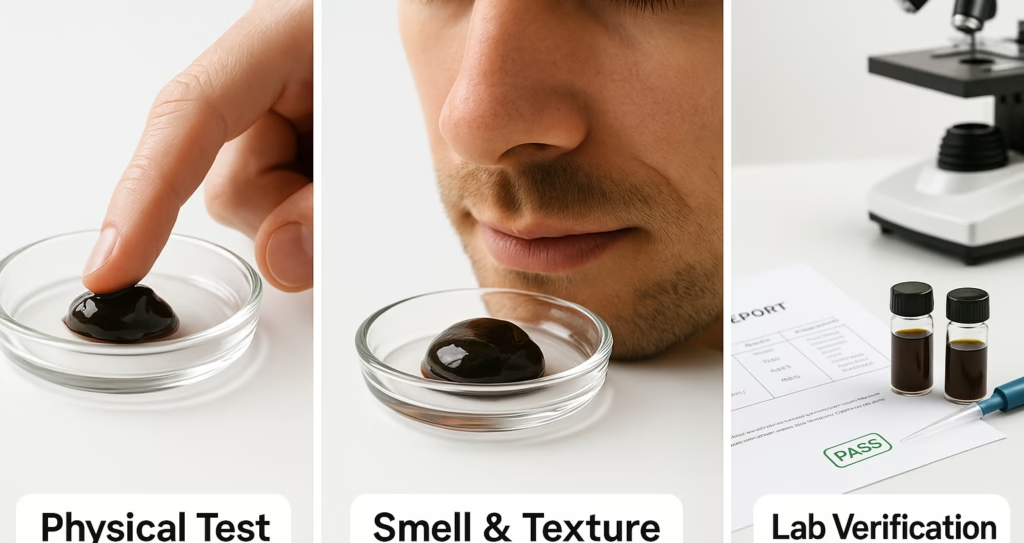
Third-party laboratory testing helps improve product transparency and consumer confidence.
Proper testing may include:
- Heavy metal screening
- Microbial testing
- Contamination analysis
- Mineral profile analysis
- Fulvic acid evaluation
Advanced laboratories often use ICP-MS testing for trace element and heavy metal verification.
Understanding ICP-MS Testing
ICP-MS stands for Inductively Coupled Plasma Mass Spectrometry.
It is an advanced scientific method used for heavy metal screening, trace element analysis, and mineral verification.
This testing method helps laboratories measure elements at extremely low levels with high precision, and is widely used for product safety and purity verification.
Why Source Region Matters
The source region strongly affects mineral profile, environmental purity, harvesting quality, and resin authenticity.
High-altitude Himalayan regions are known for mineral-rich geology, remote mountain ecosystems, and traditional resin harvesting practices.
Proper sourcing is essential for authentic mineral-rich Himalayan Shilajit.
How to Choose Authentic Himalayan Resin
Before purchasing Shilajit, verify that the product includes:
- Laboratory verification
- Transparent sourcing information
- Purification details
- Realistic scientific explanations
- Verified heavy metal testing
Avoid products that provide no testing documentation, use vague or unrealistic claims, or rely heavily on marketing language rather than science.
Frequently Asked Questions
Why is Himalayan Shilajit considered mineral rich?
Authentic Himalayan resin naturally contains trace minerals and organic compounds formed within mountainous geological environments.
Why does purification matter?
Purification helps remove impurities and improve overall resin quality and consistency.
Why are laboratory reports important?
Laboratory testing helps verify purity, safety, heavy metal screening, and authenticity.
What is fulvic acid?
Fulvic acid is a naturally occurring organic compound commonly found in authentic Shilajit.
Why does source region matter?
Mountain source environments strongly influence mineral composition and overall resin quality.
Final Thoughts
Authentic Himalayan Shilajit continues to gain global attention because of its naturally occurring mineral composition, fulvic acid content, and traditional wellness use.
Real, authentic resin quality depends heavily on:
- Responsible sourcing
- Careful purification
- Laboratory verification
- Manufacturing transparency
As awareness grows, more consumers now focus on scientific transparency and authenticity instead of exaggerated marketing claims — and this is the standard Sikmma Shilajit continues to work towards.