Discover why many Shilajit products in Pakistan are fake or unverified. Learn how authentic Himalayan Shilajit is tested, purified, and verified through laboratory analysis, fulvic acid testing, and heavy metal screening — and understand how to identify real Shilajit with real quality assurance products.
Sikmma Research Team | Reviewed by: Sikmma Group Research Team
Sikmma Shilajit — A Complete Guide to Purity, Authenticity, and Real Himalayan Resin
Introduction
The Shilajit market in Pakistan has expanded rapidly over the last few years. Search demand for terms like “best Shilajit in Pakistan,” “original Shilajit Pakistan,” “pure Shilajit resin,” and “Himalayan Shilajit Pakistan” continues to grow every month.
At the same time, this market has become flooded with unverified products, new black-market resin blends, synthetic fulvic acid claims, low-quality imported material, and products with no lab testing.
Many consumers believe all dark resin products are authentic Shilajit. In reality, purity, sourcing, and laboratory testing vary significantly between brands.
This guide explains:
- Why fake Shilajit is common
- How authentic Shilajit is tested
- What real resin looks like
- Why heavy metal screening matters
- How to identify trustworthy brands in Pakistan
Why Fake Shilajit Is So Common in Pakistan
One of the biggest reasons fake Shilajit dominates the market is low consumer awareness.
Many buyers focus only on:
- Low price
- Viral marketing
- Exaggerated fulvic acid claims
- Catchy resin visuals
Very few consumers ask:
- Where was the Shilajit sourced?
- Was it purified properly?
- Which laboratory tested it?
- How heavy metal screening was performed?
- Is the lab report genuine?
Because most buyers never verify these details, low-quality products continue spreading through marketplaces and social media platforms.
The Problem With Cheap Marketplace Shilajit
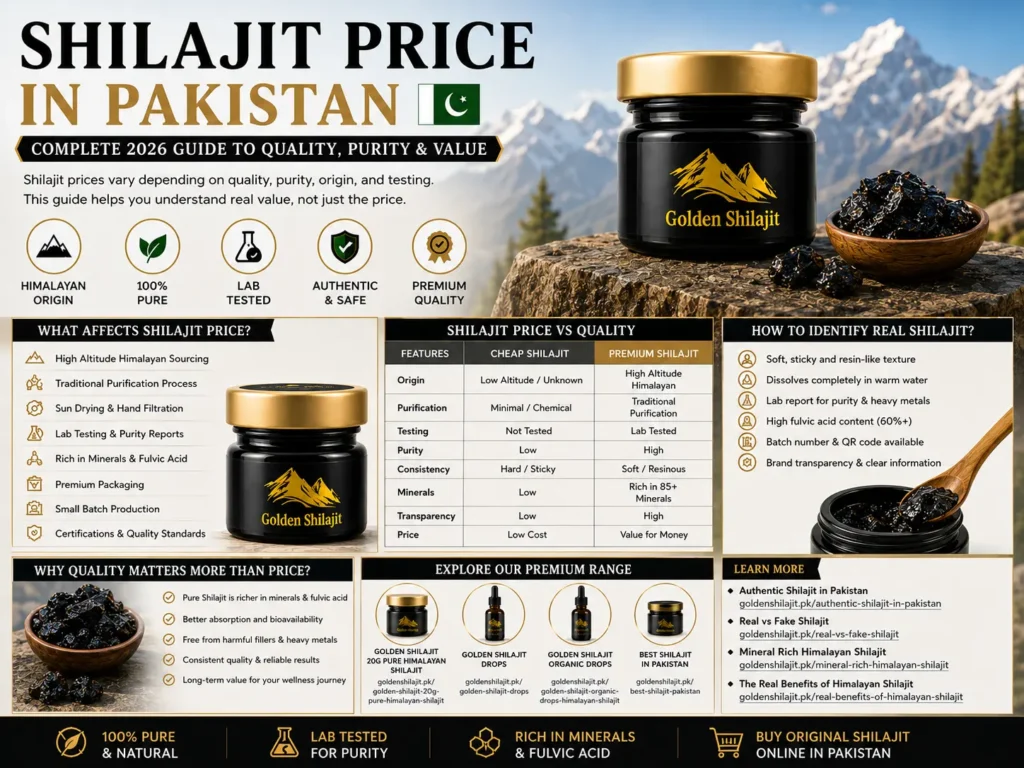
Authentic Himalayan Shilajit is difficult to harvest and purify. The proper process includes:
- High-altitude sourcing
- Filtration
- Purification
- Drying
- Laboratory testing
- Packaging and storage
This process requires time and investment. Extremely cheap Shilajit can rarely afford proper purification and testing — the cost simply does not add up. Some low-priced products may involve contamination, synthetic fillers, or artificial thickening agents, and often carry no reliable testing standards behind them.
Many products sold online and on social media carry no verified proof of authenticity.
Real Shilajit vs Fake Shilajit
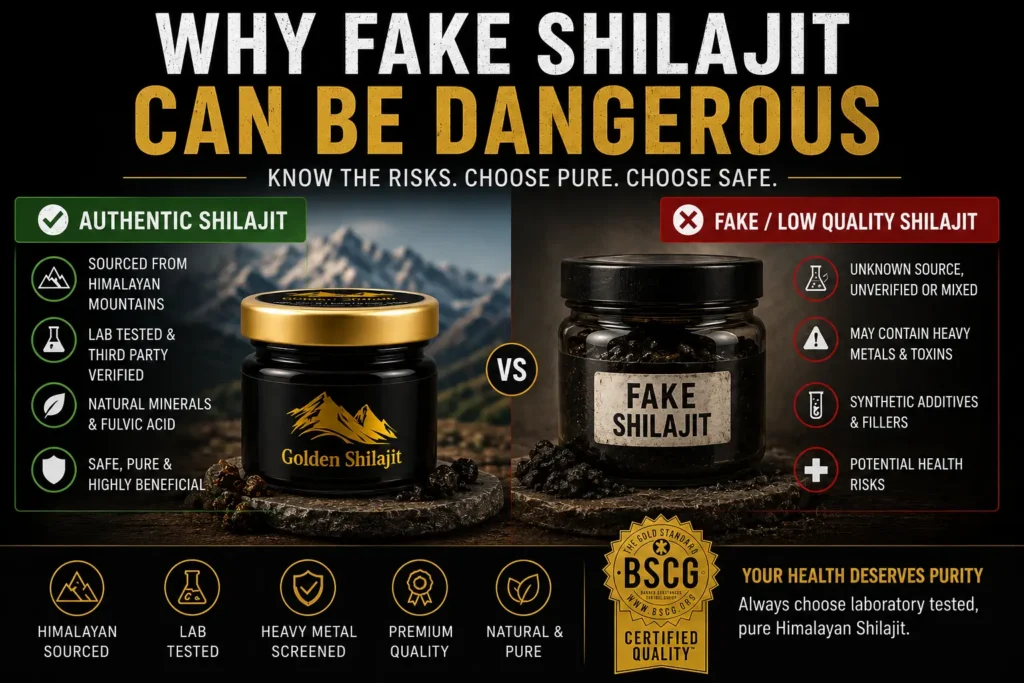
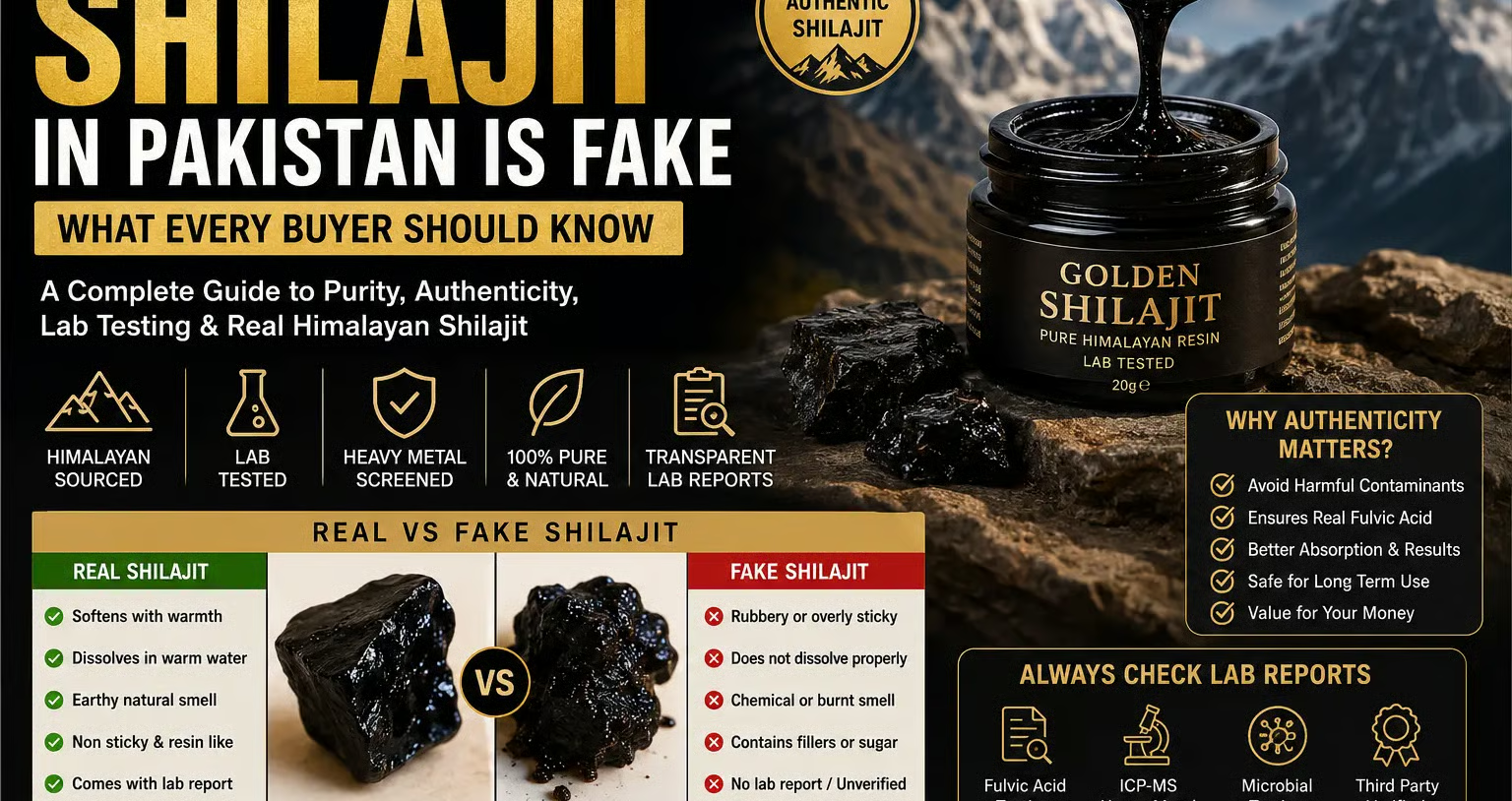
Authentic Shilajit Resin
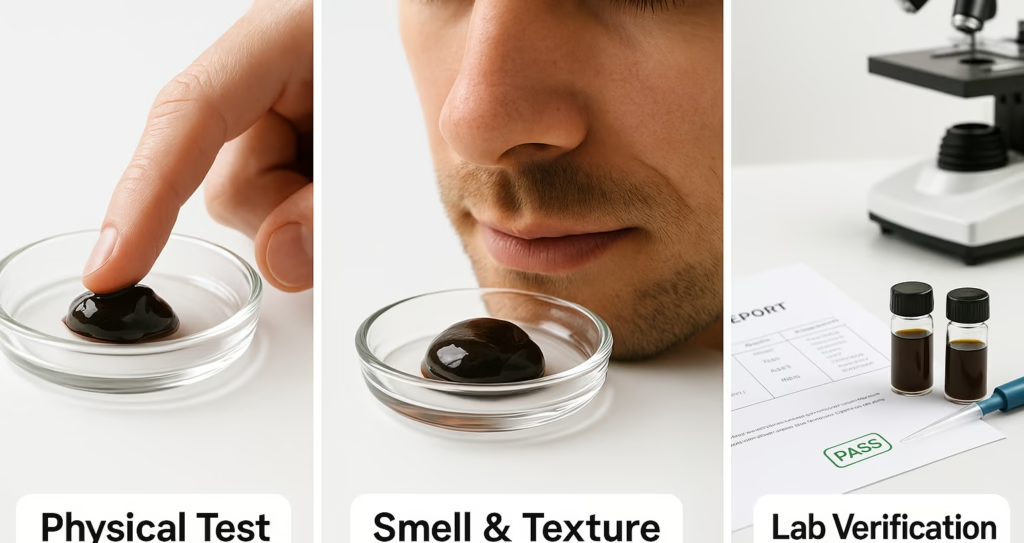
Real Shilajit usually:
- Softens naturally with warmth
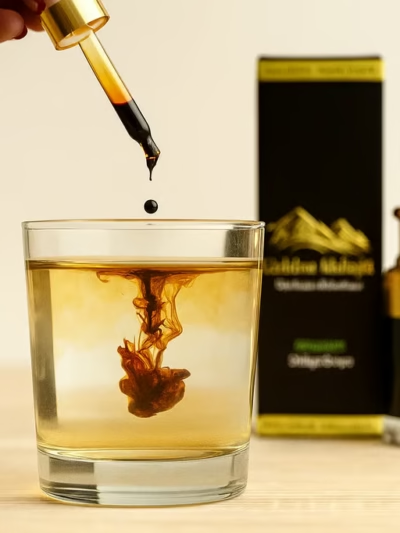
- Dissolves gradually in warm water
- Has a mineral-rich, earthy smell
- Contains natural variation in texture
- Feels resin-like instead of watery
Authentic resin also comes with transparent sourcing, laboratory reports, heavy metal analysis, and fulvic acid verification.
Fake Shilajit Products
Fake products often:
- Smell strongly chemical
- Appear unnaturally glossy
- Feel excessively sticky
- Contain inconsistency or filler
- Have artificial residue in water
Some products marketed as “pure resin” may actually contain synthetic blends mixed with low-quality material.
Why Lab Testing Matters
Laboratory testing is one of the most important indicators of authenticity.
High-quality Shilajit brands usually perform:
- ICP-MS heavy metal testing
- Fulvic acid analysis
- Microbiological testing
- Mineral profiling
Heavy metal testing helps screen for elements such as lead, mercury, arsenic, and cadmium.
Consumers should always verify whether a product includes recent third-party laboratory reports.
Understanding Fulvic Acid Claims
One of the most misleading parts of the Shilajit market is exaggerated fulvic acid percentages.
Some brands advertise “70% to 80% fulvic acid,” but many reports fail to explain testing methods, extraction standards, laboratory details, or analytical procedures.
Real transparency matters more than unrealistic numbers. Consumers should prioritise laboratory credibility, testing methodology, heavy metal safety, and overall product transparency instead of relying purely on marketing hype alone.
How to Identify Authentic Shilajit
1. Check Laboratory Reports
Always verify testing dates, laboratory names, heavy metal analysis, and fulvic acid methods.
2. Evaluate Brand Transparency
Reliable brands explain sourcing, purification, testing standards, and manufacturing process.
3. Be Careful With Extremely Low Prices
Authentic Shilajit requires proper harvesting, purification, testing, and packaging. Very low prices often indicate lower-quality material.
4. Look for Educational Content
Trustworthy brands invest in educational articles, testing transparency, and research-based information — instead of relying only on marketing hype.
Why More Buyers Are Looking for Lab-Tested Shilajit
Modern consumers are becoming more educated about supplement quality. Search terms buyers now use include “real Shilajit Pakistan,” “authentic Himalayan Shilajit,” and “original Shilajit Pakistan.”
Consumers increasingly look for safety, verified quality, and trusted sourcing. This shift is improving standards across the industry.
Why Sikmma Shilajit Focuses on Transparency
Sikmma Shilajit is designed to emphasise purification transparency, realistic fulvic acid testing, Himalayan sourcing, and educational buyer information.
The brand focuses on helping consumers better understand how authentic Shilajit works, how purity is verified, why quality is worth understanding, and how to make an informed purchase.
Frequently Asked Questions
How can I identify real Shilajit in Pakistan?
Authentic Shilajit usually comes with lab testing, transparent sourcing details, heavy metal screening, and consistent resin texture.
Why is fake Shilajit dangerous?
Low-quality products may contain contamination, synthetic fillers, or unverified ingredients, which can be a safety concern.
Is all black resin real Shilajit?
No. Many fake products imitate the appearance of authentic resin without proper purification or testing behind them.
Why is authentic Shilajit expensive?
Real Shilajit involves demanding sourcing, purification, laboratory testing, and proper packaging, all of which add to the cost.
What should the best Shilajit in Pakistan offer?
The best Shilajit brands focus on transparency, verified testing, and authentic sourcing rather than exaggerated claims.
Final Thoughts
The Pakistani Shilajit market continues to grow rapidly, but not every product reflects genuine quality or careful manufacturing.
Consumers should focus on transparency, verified lab reports, purification standards, and realistic claims — since knowing what to look for is often more important than long-term satisfaction with any single purchase.
Real authenticity is verified, not assumed. At Sikmma Shilajit, we aim to make that verification available and easy to understand for every buyer.